THE HERBAL GARDEN
We all love plants for different reasons. Some people enjoy the continuous cycle of caring for their collection, while others may simply enjoy plants for aesthetic reasons. Head down to Balai Khazanah Islam to discover our collections of plants. You might be surprised to learn some unexpected benefits of our plants.
Ziziphus Mauritiana
Ziziphus Mauritiana, commonly known as Indian jujube, is a small to medium-sized tree reaching heights of up to 15 meters. It features a spreading crown and drooping branches. The leaves are ovate to oblong, glossy, and alternately arranged, with three prominent veins at the base…
FICUS CARICA
Ficus carica, commonly known as the common fig, is a deciduous tree or large shrub that can grow up to 7–10 meters tall. It has smooth, gray bark and a dense, spreading canopy. The leaves are large, deeply lobed, and rough on the upper surface, providing a distinctive look…
AGATHIS BORNEENSIS
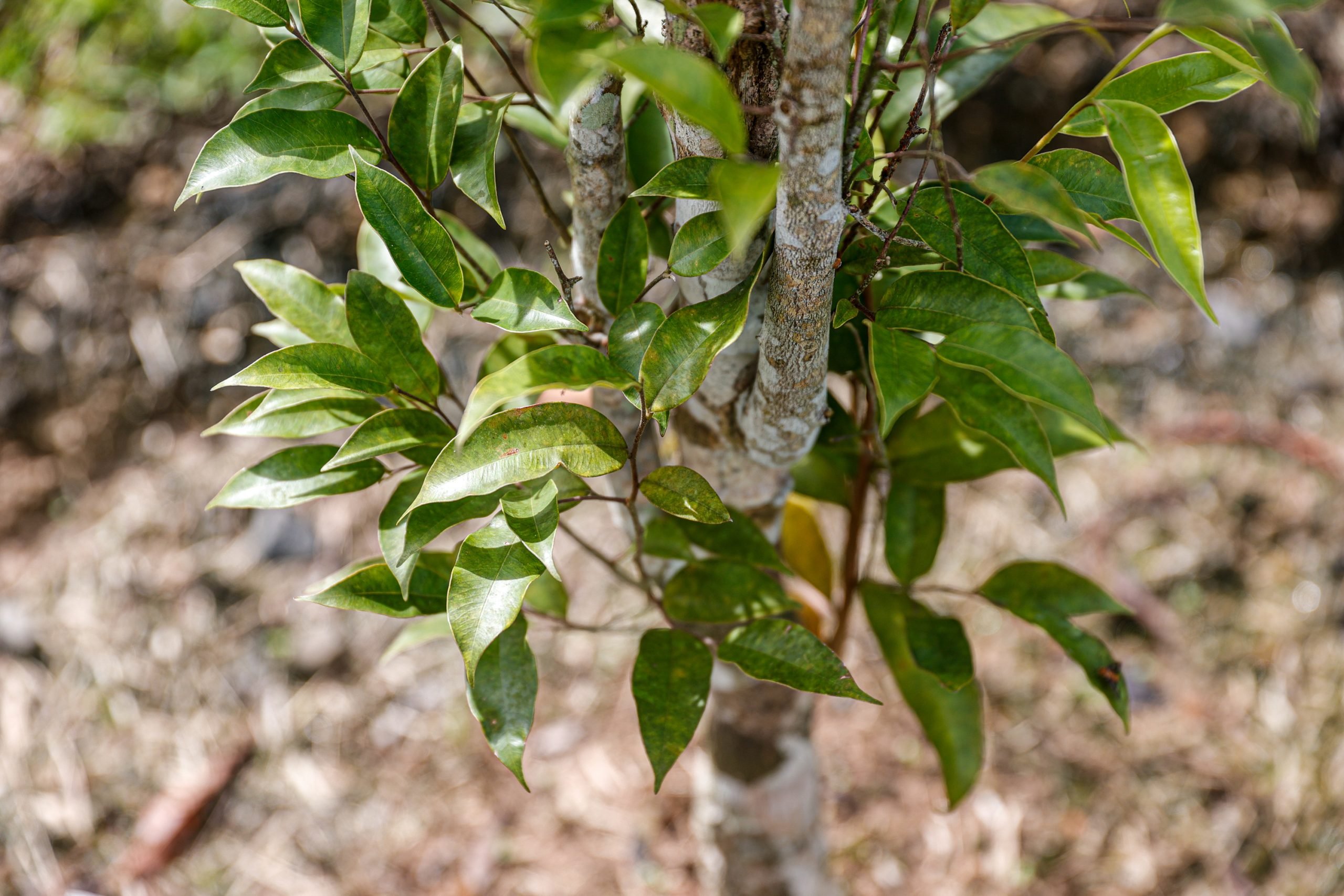
Agathis borneensis is native to Borneo and parts of the Malay Peninsula. It typically grows in tropical rainforests, thriving in lowland and hill forests up to an altitude of about 900 meters. The tree prefers well-drained soils and is often found in primary forests.
ALOE VERA
Aloe vera is a succulent plant characterized by its thick, fleshy, green to grey-green leaves. The leaves are lance-shaped with serrated edges and are arranged in a rosette pattern. The plant can grow up to 60–100 cm in height..
PIPER BETLE (BETEL LEAF)
Piper betle is a perennial, evergreen vine belonging to the Piperaceae family. The plant is characterized by its heart-shaped, glossy, and aromatic leaves. It climbs using adventitious roots and can reach lengths of up to 5 meters…
ALSTONA ANGUSTILOBA
Alstonia angustiloba, is a tree up to 40 m tall, with a pagoda-shaped crown, and tiered branching. It has bark dark grey, smooth when young, becoming slightly cracked when it gets older. The wood is pale yellow and soft. It is the preferred local food plant for caterpillars of the moths. Its flowers are also insect-pollinated.
AQUILARIA MALACCENSIS
Aquilaria malaccensis, commonly known as agarwood, eaglewood, or gaharu, is a species of tree belonging to the family Thymelaeaceae. It is a medium to large evergreen tree, capable of reaching heights of up to 40 meters and diameters of 60 centimeters.
ACALYPHA HISPIDA
Acalypha Hispida, is a tropical shrub that produces soft and furry red pendulous flowers hanging down from the leaf axils, resembling strands of yarn or cat’s tail that can be as long as 45cm…
DILLENIA SUFFRUTICOSA
Simpur, belonging to the genus Dillenia, encompasses several species of evergreen trees and shrubs native to Southeast Asia. These plants are characterized by their glossy, leathery leaves, large and showy flowers, and distinctive fruits…
ALPINA GALANGA
lpinia galanga, or Lengkuas, is a large herbaceous plant that can grow up to 3.5 m in height. Its rhizome is a versatile ingredient used in Southeast Asian cuisine such as in lontong, rendang and spice mixes, imparting a zesty heat and complimentary note to other ingredients in recipes.
Acalypha Hispida
Acalypha Hispida, is a tropical shrub that produces soft and furry red pendulous flowers hanging down from the leaf axils, resembling strands of yarn or cat’s tail that can be as long as 45cm. It is easy to grow to a large shrub but can be maintained as a small plant by regular pruning, best planted on the ground as accent plant or grown in elevated containers.
Taxonomy :
- Family : Euphorbiaceae
Common name :
- Malay : Ekor kucing
Habitat & Distribution :
Acalypha hispida thrives in tropical region. It is native to Malesia and New Guinea.
Uses :
Traditionally the leaves are laxative, diuretic and used in the treatment of leprosy and gonorrhea. Different part of the plant is also used in infectious diarrhoea, pulmonary problems and as an expectorant in asthma.
Alpinia Galanga
Alpinia galanga, or Lengkuas, is a large herbaceous plant that can grow up to 3.5 m in height. Its rhizome is a versatile ingredient used in Southeast Asian cuisine such as in lontong, rendang and spice mixes, imparting a zesty heat and complimentary note to other ingredients in recipes. The Lengkuas also produce fragrant and edible yellow-white flowers that are eaten as vegetable.
Taxonomy :
- Family : Zingiberaceae
Common Name :
- Malay : Lengkuas
- English : Siamese Ginger
Habitat & Distribution :
Alpinia galanga is natively distributed in Southeast Asia countries.
Uses :
- Food (Herb or Spice) : The rhizome has a sharp, spicy flavor which is popular in Southeast Asian cuisine. It is finely blended with other spices to make a paste for dishes like laksa an curries.
- Food (Fruit or Vegetable) : The flowers are young shoots are steamed and consumed as a vegetable.
- Medicinal : In Peninsular Malaysia, the seeds are used in traditional medicine to treat vomiting, herpes, colic and diarrhoea. The Filipinos prepare a leaf decoction to treat rheumatism. In Java, the pounded rhizome is applied to wounds and sores.
Alstonia Angustiloba
Alstonia angustiloba, is a tree up to 40 m tall, with a pagoda-shaped crown, and tiered branching. It has bark dark grey, smooth when young, becoming slightly cracked when it gets older. The wood is pale yellow and soft. It is the preferred local food plant for caterpillars of the moths. Its flowers are also insect-pollinated.
Taxonomy :
- Family : Apocynaceae
Common name :
- Malay : Pulai, Pulai Lilin
- Indonesia : Pulai Hitam
Habitat & Distribution :
Alstonia angustiloba thrive in tropical regions. It is natively distributed in Sumatra, Peninsular Malaysia, Singapore, Borneo and Java. Often found in Primary Rainforest, Secondary Rainforest, Freshwater Swamp Forest.
Uses :
- Timber & Products : The soft wood is used in making floor boards, household items, matches and posts.
Traditional Medicinal Properties :
In Southeast Asia countries like Malaysia and Indonesia, the plant is used in traditional medicine to treat headaches, skin sores and gynecological problems.
It is important to note that some therapeutic effects from traditional medicinal uses of plants are not currently supported or verified by scientific research. As all Apocynaceae species, contain white, milky sap which can cause an allergic reaction especially for those with sensitive skin.