
panel 2 1
BKISHHB_RafieRoslan-2
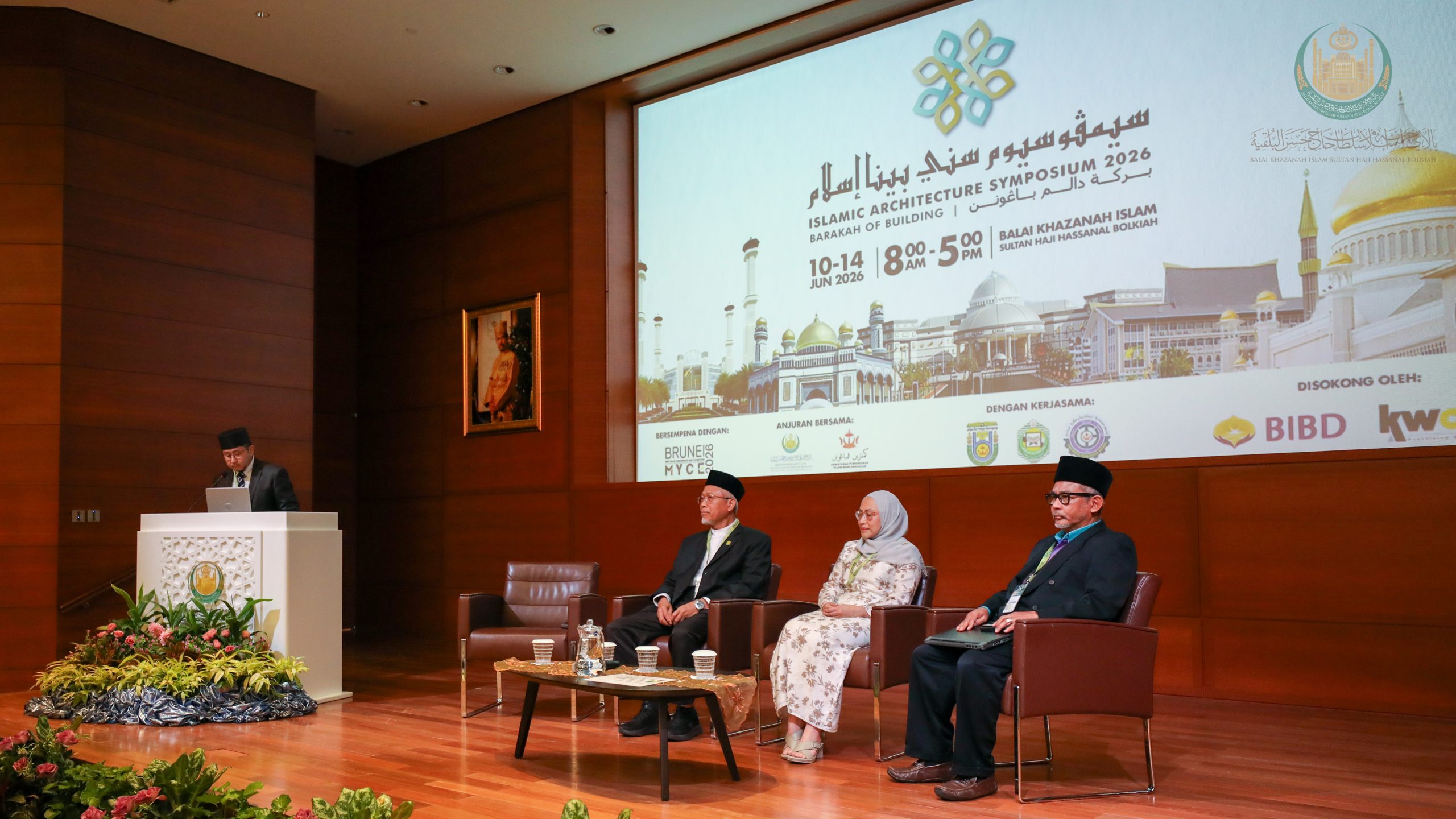
The Islamic Architecture Symposium 2026 continued Thursday morning with the Second Panel Session, themed ‘Sustainability as a Trust – Reframing Sustainability’. The event took place at the Auditorium Hall of the Sultan Haji Hassanal Bolkiah Islamic Khazanah Hall (BKISHHB).
Present as the Guest of Honour for the second panel session was the Deputy Permanent Secretary for Policy and Religion at the Ministry of Religious Affairs, Awang Haji Shamshol bin Haji Omar.
The programme commenced with the recitation of Surah Al-Fatihah and Doa Selamat, led by Executive Officer of BKISHHB, Awang Muhammad Izzul Afifi bin Kifli.
The session was moderated by the Director of the Academy of Brunei Studies (APB), Universiti Brunei Darussalam (UBD), Dr. Abdul Hai bin Haji Julay.
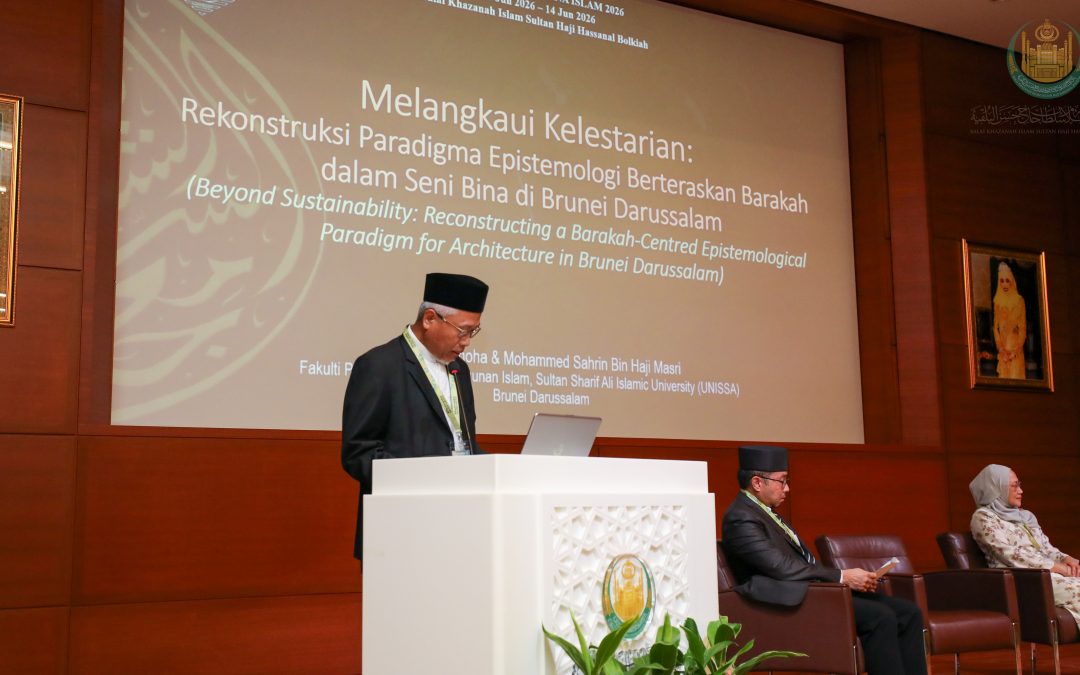
The first presentation, titled ‘Beyond Sustainability: Reconstructing the Epistemological Paradigm Based on Barakah in the Architecture of Brunei Darussalam’, was delivered by the Dean of the Faculty of Islamic Development Management, Universiti Sultan Sharif Ali (UNISSA), Associate Professor Dr. Anis Malik Thoha. This presentation discussed a novel approach to architecture that transcends conventional sustainability concepts by integrating the principle of barakah within the context of Brunei Darussalam.
The second presentation, titled ‘Islamic Architecture: Timeless Sustainability for Modern Design’, was delivered by Ar. Hajah Roswatinee binti Dato Paduka Haji Abdullah, Head of the Green and Sustainable Architecture Committee of the Institute of Architects PUJA Brunei (IAPB), institution of Surveyors, Engineers and Architects (PUJA). The presentation demonstrated that sustainability is not a modern innovation in Islamic architecture, but rather a foundational design principle that emphasizes balance, amanah (trust), and harmony between humanity, nature, and the built environment. Throughout history, traditional Islamic architecture has utilized responsive design elements—such as courtyards, mashrabiya screens, wind towers, water features, and locally sourced materials—to enhance natural comfort and reduce energy consumption.
The session concluded with a presentation titled ‘Integrating Islamic Value and Ethics into Sustainable Built Environment Education for Architecture Programmes in Brunei Darussalam’ by Assistant Professor at Universiti Teknologi Brunei (UTB), Dr. Zulkefle bin Ismail. This presentation highlighted an educational framework implemented within UTB’s Architecture Programme that integrates Islamic values and ethics into sustainable design curriculum. The framework is built upon the principle of khalifah (vicegerency), which emphasizes environmental stewardship, integrity (amanah) in design decisions, moderation (wasatiyyah) focusing on balance and resource efficiency, excellence (ihsan) in design execution, public interest (maslahah) prioritizing community well-being, and environmental preservation (hifz al-bi’ah).
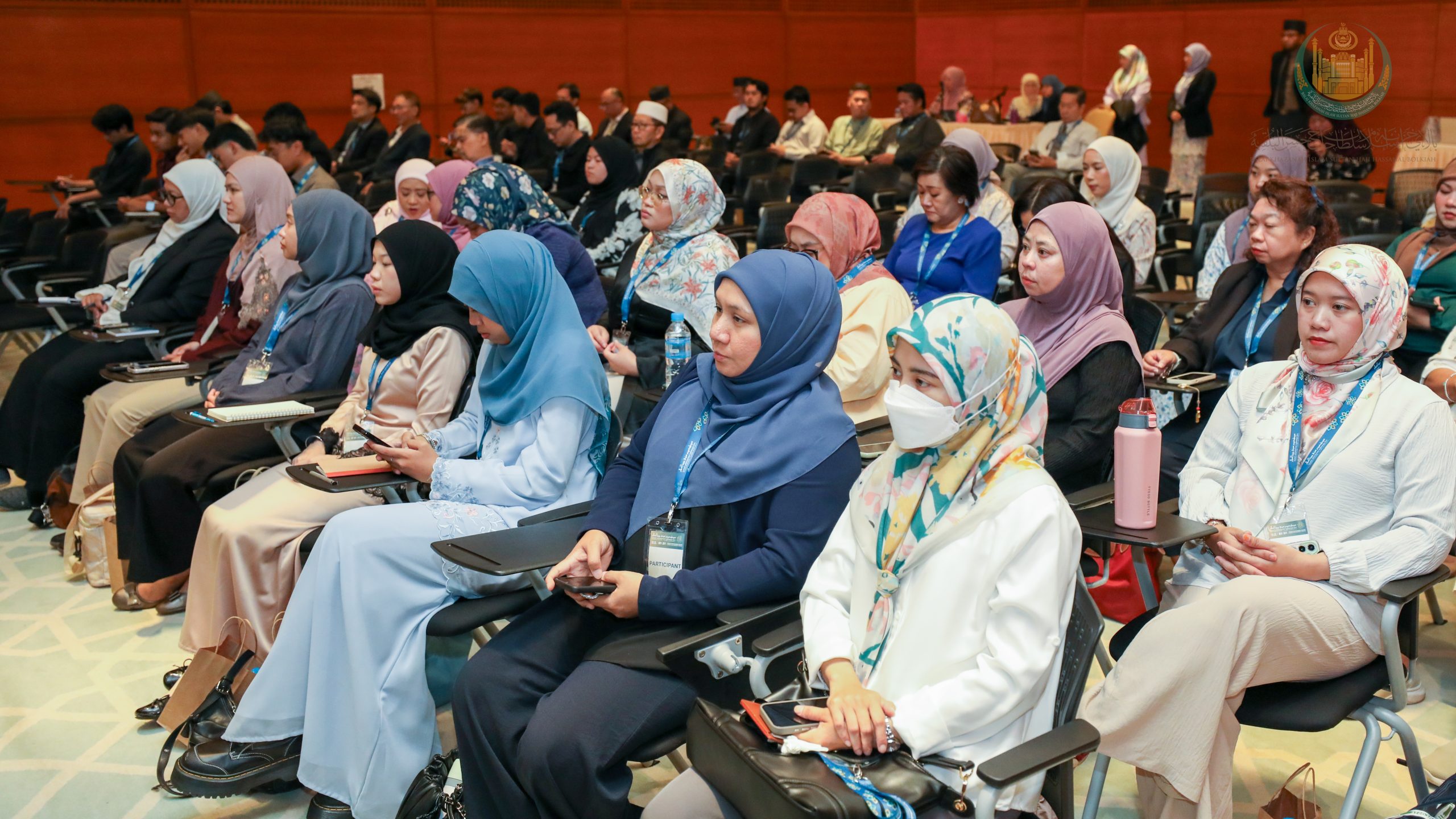
The panel session concluded with a question-and-answer segment, providing participants with the opportunity to interact directly with the panelists and exchange insights on the discussed themes.
The four-day Islamic Architecture Symposium 2026, themed ‘Barakah in Buildings: Architectural Practices and Sustainability in Brunei Darussalam’, ran from June 10 to 14, 2026 (excluding Friday).
The event is co-organized by BKISHHB and the Ministry of Development, held in conjunction with the Brunei Mid-Year Conference and Exhibition 2026 (Brunei MYCE 2026).
Among the key objectives of the symposium is to bring together architects, scholars, professionals, expatriates, students, and stakeholders. It serves as a knowledge-sharing platform focused on Islamic architecture as an approach that harmonizes aesthetics, ethics, green innovation, and the Melayu Islam Beraja (MIB) philosophy, while preserving environmental sustainability, cultural identity, and the heritage of Brunei Darussalam.