
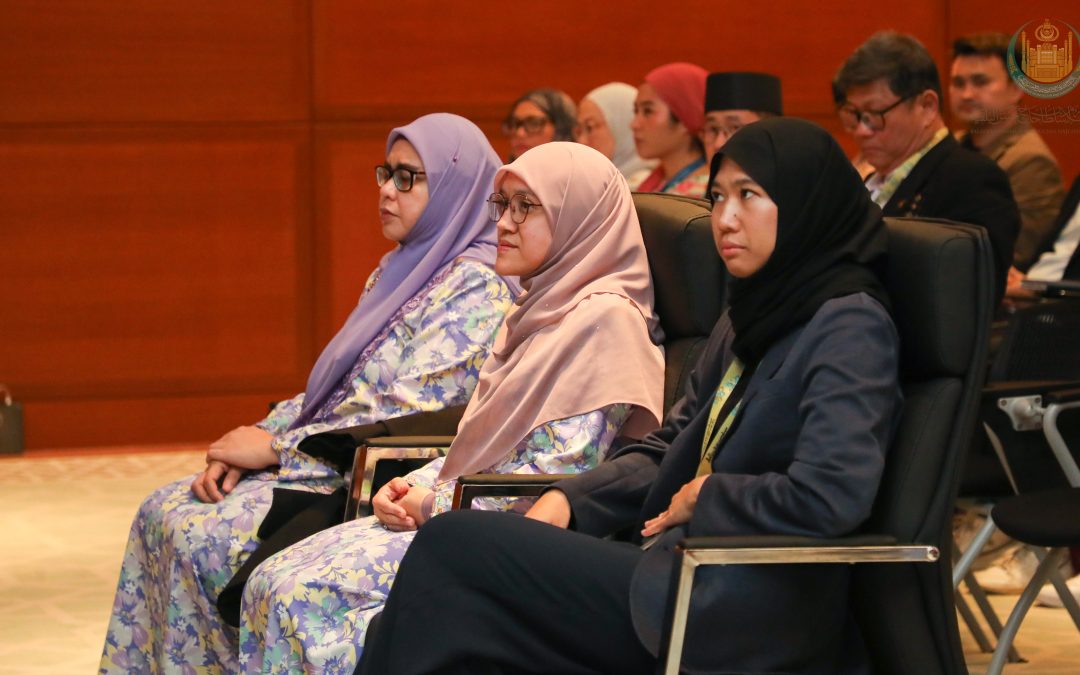
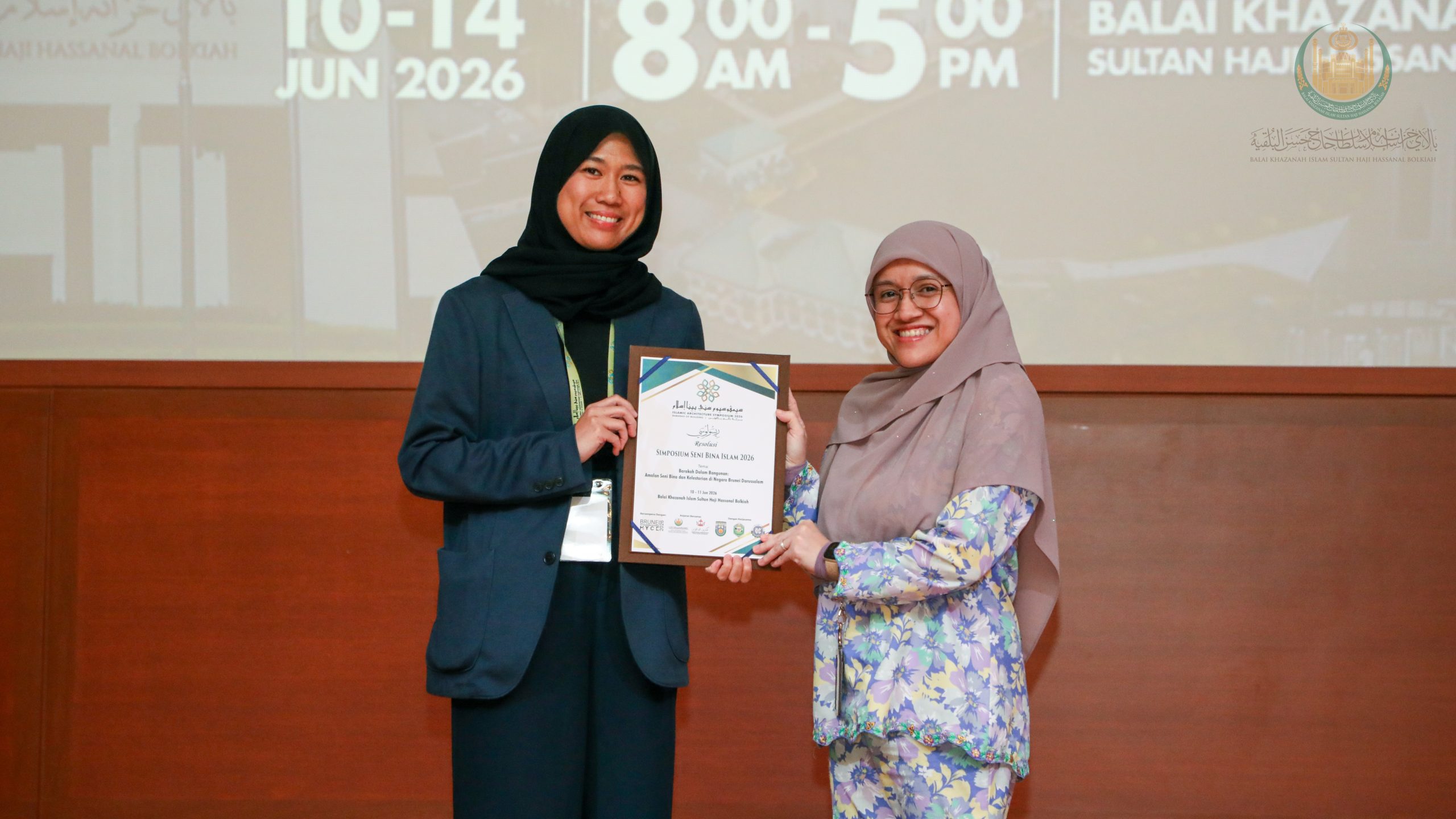
The Islamic Architecture Symposium 2026, organized by Sultan Haji Hassanal Bolkiah Islamic Khazanah Hall (BKISHHB) in collaboration with the Ministry of Development, concluded with a closing ceremony featuring the presentation of the Islamic Architecture Symposium 2026 Resolutions.
Present as the Guest of Honour was Dayang Hajah Nur Kamilah binti Haji Ismail, Acting Deputy Director of BKISHHB and as Acting Co-Chair of the Symposium.
The presentation of the Architecture Symposium 2026 Resolutions was delivered by Ar. Hajah Hafizah binti Dato Paduka Haji Mohd. Nor, an architect from the Department of Technical Services at the Public Works Department.
In her presentation, she shared that the symposium formulated 10 key resolutions:
• Strengthening Islamic-Bruneian Identity: Affirming Islamic architecture as a manifestation of the Melayu Islam Beraja (MIB) philosophy and Maqasid Syariah.
• Embodying Barakah: Establishing the concept of barakah (blessings) as a core paradigm in design, extending conventional sustainability into spiritual, moral, and social dimensions.
• Integrating Tradition and Innovation: Harmonizing Islamic design values with modern technology to create architectural forms characterized by energy efficiency and the principle of moderation.
• Enhancing Higher Education: Strengthening the curriculum of higher education institutions in Brunei Darussalam based on six core Islamic principles—Khalifah (Stewardship), Amanah (Trust), Wasatiyyah (Moderation), Ihsan (Excellence), Maslahah (Public Interest), and Hifz al-Bi’ah (Environmental Preservation)—to produce ethical and responsible architects.
• Standards for Sacred Spaces: Ensuring Mosque construction strictly adheres to Islamic law (Syarak) and technical standards to guarantee safety, functionality, and longevity as enduring Islamic landmarks.
• Inclusive Accessibility: Consistently implementing the Different Abilities Design Guidelines (2018) to ensure buildings and public spaces remain accessible to all, including senior citizens and individuals with different abilities, reflecting Islamic values of compassion and communal benefit.
• Preserving Heritage and Sustainability: Utilizing iconic structures such as BKISHHB and the Ash-Shaliheen Mosque as benchmarks for balancing cultural heritage with modern sustainability.
• Expanding the Role of Mosques: Strengthening the function of mosques as hubs for education, social welfare, spiritual reflection, and environmental sustainability, rather than solely as places of worship.
• Fostering Strategic Collaboration: Encouraging active cooperation among the government, academic institutions, architects, and the community to ensure Islamic architecture remains visually inspiring, relevant, and functional in modern life.
• Supporting National and Global Visions: Aligning Islamic architecture with Wawasan Brunei 2035 as a pillar of integrated development that contributes directly to national objectives and the global Sustainable Development Goals (SDGs).
The ceremony coinceded with the official handover of the Symposium Resolutions to the Guest of Honour, followed by the presentation of certificates of appreciation to 121 participants of the Islamic Architecture Symposium 2026.
The four-day symposium ran from June 10 to June 14, 2026, with a recess on Friday.
The core presentations took place across two days, from June 10 to June 11, 2026, featuring a total of 10 paper presentations and one keynote address.
Themed ‘Barakah in Buildings: Architectural Practices and Sustainability in Brunei Darussalam’, the event was held as part of the Brunei Mid-Year Conference and Exhibition 2026 (Brunei MYCE 2026).
To further enrich the symposium, the event featured a variety of interactive exhibitions and artistic activities showcased by government agencies, higher education institutions, professional bodies, financial institutions, and diplomatic missions to Brunei Darussalam.